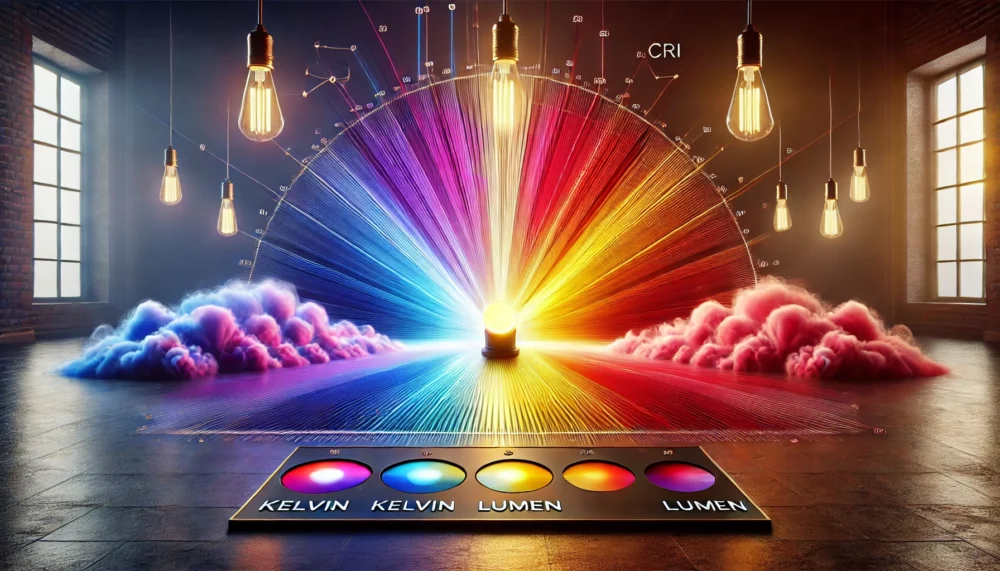
Throughout human history, light has not only been a fundamental element of life but also a significant tool in the development of art, science, and technology. In this article, we address the concepts of color temperature, lumen, and CRI. Furthermore, visible colors depend on the properties and source of the light. Especially in visual media such as television and cinema, the correct use of light can influence the audience’s perception and emotional responses. In this article, we will examine the concepts of Kelvin, Lumen, and CRI in detail to understand the scientific foundations of light and take an in-depth look at the applications of these concepts in the television and cinema sectors.
1. Light, Color Temperature, and Visual Perception
Light consists of waves that form the visible part of the electromagnetic spectrum. Additionally, the human eye perceives these waves, helping us make sense of our surroundings. However, it is not just the presence of light, but also its properties that affect our perception. The temperature, brightness, and color accuracy of light determine how the objects we see are perceived. We express each of these properties through measurements such as color temperature (Kelvin), Lumen, and CRI.
2. Kelvin (K): The Color Temperature of Light
Kelvin is a unit of measurement that expresses the color temperature of light. Moreover, the color temperature of a light source generally determines the tone of the light it emits. The Kelvin scale helps us understand whether light is warm (redder/yellowish tones) or cool (bluer tones).
2.1 The Kelvin Scale and Light Types
- 1000K – 3000K (Warm Light): Specifically, this range emits a warm, yellowish light similar to candlelight or classic incandescent bulbs. It is ideal for creating a relaxing atmosphere and is commonly featured in homes, restaurants, and romantic scenes.
- 4000K – 5000K (Natural White Light): Furthermore, this range offers a color temperature close to natural daylight. It is common in workspaces, offices, and television studios. It provides a natural look and reduces eye strain.
- 6000K and above (Cool Light): It provides a sharper light with blue-white tones. It stands out in hospitals, laboratories, and scientific programs. It is also ideal for creating a dramatic effect in science fiction and thriller films.
2.2 The Importance of Kelvin in Television and Cinema
In television and cinema productions, the color temperature of light plays a critical role in shaping the atmosphere of the scene. For example:
- An intimate and nostalgic mood can be created in a drama scene by using a warm light such as 3000K.
- A technological and sterile atmosphere can be achieved in a science fiction film by preferring a cool light such as 6500K.
- A realistic appearance is obtained in nature documentaries by using natural white light around 5000K.
3. Lumen (lm): The Brightness of Light
Lumen expresses the total amount of light emitted by a light source. At the same time, more lumens mean a brighter light. However, brightness is related not only to the intensity of the light but also to the way the light is distributed. The lumen value directly affects the clarity and quality of images, especially in television and cinema productions.
3.1 Application Areas of Lumen Values
- Home Lighting: While 100-300 lumens/m² may be sufficient in resting areas such as the living room, 300-500 lumens/m² is required in kitchens and workspaces.
- Television Studios: Lights with high lumen values allow cameras to perform better. This is particularly important in live broadcasts.
- Cinema Sets: Different lumen values are required for different scenes. For example, low lumen values are preferred for night scenes, while higher lumen values are needed for outdoor scenes.
3.2 Lumen and the Viewer Experience
Choosing the correct lumen values for television and cinema affects how the viewer perceives the scene. Specifically, while a light that is too bright can ruin the realism of the scene, insufficient light can cause details in the scene to be lost. For this reason, production teams meticulously adjust the correct light level for every scene.
4. CRI (Color Rendering Index): Color Accuracy
CRI is an index that measures how accurately a light source shows the colors of objects. Additionally, it takes a value between 0 and 100, and high CRI values ensure that colors look more vivid and natural. For example, sunlight has a CRI value of 100 and shows colors most accurately.
4.1 The Importance of CRI in Cinema and Television
- Set Design: Furthermore, lights with high CRI values ensure that the colors used in costume and set design appear correctly.
- Product Promotions: Lights with high CRI values are required to show the true colors of products, especially in commercials.
- Natural Appearance: Additionally, high CRI values in documentaries and nature scenes offer viewers a more realistic experience.
5. Use of Light in Television and Cinema
In television and cinema productions, light is a critical element in determining the atmosphere and emotional tone of scenes. Moreover, lighting design directly affects how the viewer will react to the scene. Below, we will examine the use of light in television and cinema in detail:
5.1 Lighting Techniques
- Key Light: Specifically, it is the primary light that illuminates the main scene. It is generally ideal for highlighting the most important elements of the scene.
- Fill Light: Furthermore, it is ideal for softening the shadows created by the key light. It ensures the scene looks more balanced.
- Back Light: Specifically, it is the light coming from behind the subject. It is ideal for adding depth and dimension.
5.2 Color Filters
Color filters are ideal for changing the color of light. This is an effective method for increasing the emotional impact of scenes. For example:
- Blue Filters: Additionally, they create a cold and melancholic atmosphere.
- Yellow Filters: Specifically, they provide a warm and intimate environment.
- Red Filters: Furthermore, they are ideal for creating tension and passion.
6. Conclusion
Light is the cornerstone of visual media. Moreover, concepts such as Kelvin, Lumen, and CRI help us understand the properties of light and use it correctly. The use of this information in television and cinema productions offers viewers impressive and unforgettable experiences. Understanding the science of light is beneficial not only in professional fields but also in daily life. The right light creates the right atmosphere and reveals the magic of colors.
You can review our stage rental and lighting design services for your event’s lighting setup. Additionally, you can examine CIE resources for light measurement standards.
Colors are the language of nature; they tell us the rhythm of the visible world through light and energy.
Isaac Newton · Scientist